
5G Fixed Wireless Access (FWA) is the hottest game in town. According to Polaris Market Research, the FWA market set to reach US $88.5 Billion By 2027 – with a whopping CAGR of 99.3%! [1] Currently, nearly every major US mobile operator has an offering.
5G FWA is about providing high speed internet service to homes and businesses, but without the need to physically dig a trench and run fibre to each location. That expensive last leg is instead being delivered through a more cost-effective wireless connection. The signal travels from the tower to a 5G radio antennae mounted on the home or business or directly to an indoor router, where it can be accessed like traditional Wi-Fi.
For those who already enjoy the benefits of a high-speed internet connection, they may be wondering – what’s all the fuss about?
Here are five reasons why 5G FWA is so exciting:
- Gigabit speeds – FWA has been around for years, but 4G speeds couldn’t compete with fibre-to-the-home. 5G changes all that, and it’s what makes FWA so attractive going forward. Not all 5G FWA connections will provide gigabit speeds, but it’s typically competitive with other high speed broadband offerings and can exceed one hundred Mbps.
- Bridging the digital divide – Rural communities have had to go without high-speed internet for decades. That’s because the cost of running fibre to these homes and businesses hasn’t been cost-effective. This has created a nation of digital ‘haves and have-nots’. FWA helps solve this problem by delivering last mile service wirelessly. The CTIA estimates 5G FWA could serve 8.4 million rural households — nearly half the rural homes in the U.S. — with a “future-proof”, rapidly deployable, and cost-effective high-speed broadband option. And with the Rural Digital Opportunity Fund (RDOF), the Broadband Equity, Access, and Deployment (BEAD) program, and many other government initiatives committing billions of dollars towards eliminating the digital divide, mobile service providers finally have both the financial incentive and the technological means to participate in solving this critical issue.
- Lower cost, faster to deploy – FWA is easier and faster to deploy, and a lower cost way to deliver high-speed Internet access in areas that lack broadband. With no permits to acquire, poles to wire or trenches to dig, the cost for indoor customer premise equipment is the biggest output, and that’s expected to drop from $475 in 2020 to $180 by the end of 2023. Some carriers are opting to eat these costs to gain market share.
- Optimises unused spectrum – One of the largest capital expenses for a mobile operator is its wireless spectrum, and carriers constantly look for ways to improve its return on investment. FWA helps them do that. In rural areas, which are prime markets for FWA, there is typically extra spectrum capacity due to lower population density. Plus, usage for traditional mobile users is heavier during the day, while home internet use peaks in the evening. It makes perfect business sense.
- Untapped market for mobile operators – Deloitte Global predicts the number of 5G FWA connections will grow to roughly 88 million by the end of this year. For mobile operators in saturated markets like the U.S.- this is a rare and exciting new revenue generating opportunity. Offering high speed home and business internet in regions starved for these services promises an incredible potential for growth.

Lots of good news – but the proper tools are critical to FWA success
5G FWA has some unique challenges compared to fixed network offerings. One of the key questions is, how can operators ensure customers are well qualified for FWA access?
Fixed line access is an easy equation. 5G FWA networks are more complex and difficult to design due to the nature of the technology, with network planners having to account for varying levels of signal loss resulting from building materials, outdoor terrain, and even weather. Many operators offer an ‘open returns’ policy on customer-premise equipment, but this can quickly become an expensive situation if many customers are dissatisfied with the quality of service or connection speeds when, for example, their internet signal gets disrupted when trees sprout leaves in the spring.
Mobile internet has typically been offered as a ‘best-effort’ service, which basically means you get what you get. Until now, it has not come under the microscope in terms of availability or quality of service to consumers. If service quality or the signal were patchy, customers just had to deal with it. But with fixed wireless access, customers will expect continuous service at a fixed location. How can operators address this challenge? They will need to step up their game to ensure FWA customers are well informed about the challenges and potential implementation issues, while also empathising with those that have trouble with their connectivity.
Learn More
Enghouse LoopCare and Network Visual Intelligence products offer several solutions to these emerging problems.
LoopCare FWA automated testing enables customer service, installation and repair, and network operations teams to manage specific FWA use cases. It addresses both mobile and fixed network domains which ensures a more competitive total cost of ownership.
Network Visual Intelligence Coverage Portal empowers customers to check their FWA eligibility through accurate, interactive maps and integrated web-based tools.
Network Visual Intelligence Proactive Care provides hyper personalised care to FWA subscribers through fully automated proactive and real-time notifications about service impacting disruptions at CPE location.
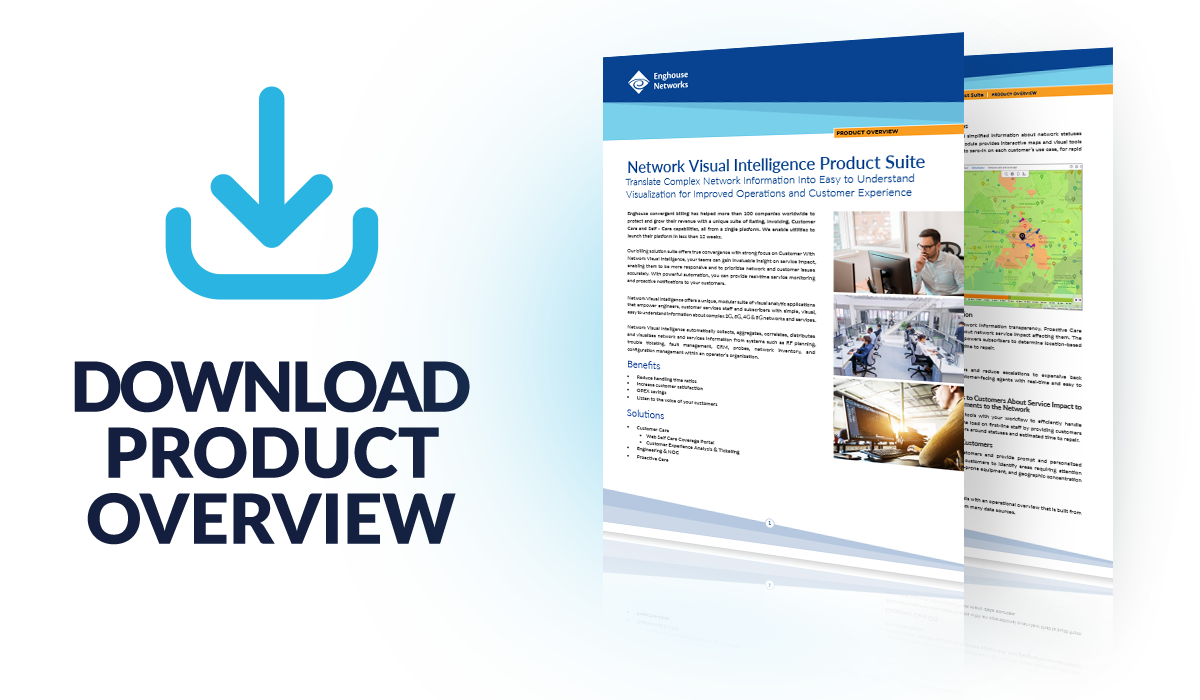
For more information about how to lift your 5G FWA service to the next level of care, download our product overview or contact us today.