
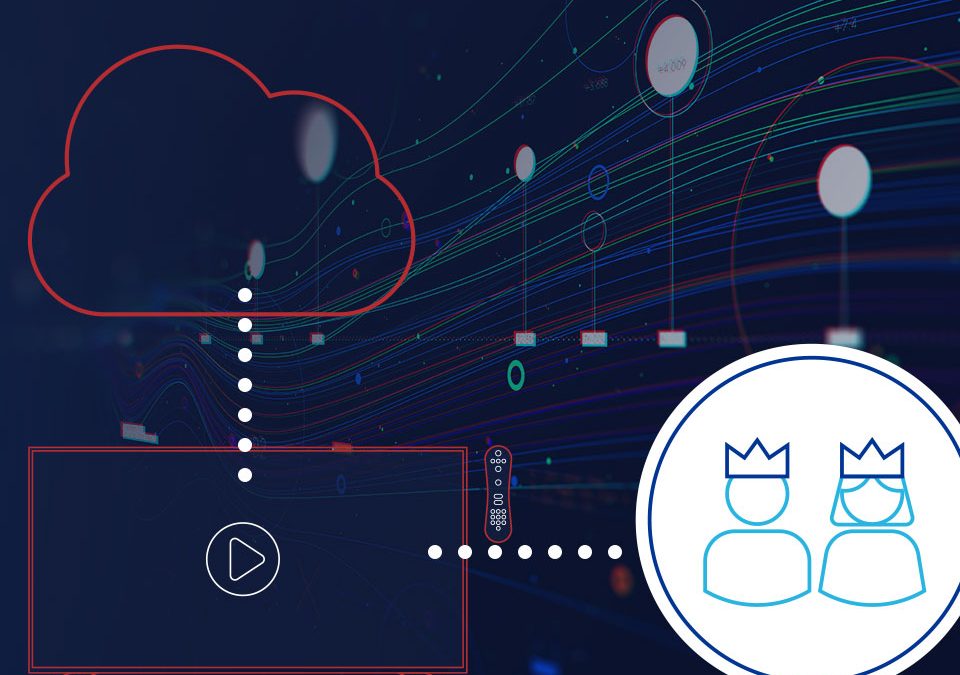
“What do we want to watch? Everything! How do we want to watch it? Our way!”
When it comes to delivering video services today, it’s a whole new world. Not too long ago, programming was determined almost exclusively by networks and advertisers. Viewers had limited choices about where, when, and how they could consume content. Cable disrupted this reality, then satellite disrupted cable, and then OTT video disrupted…everything.
Now, consumers are behind the wheel. And increasingly, they want to map their own unique content journeys. What tends to still surprise people in the industry is the pace of ongoing change.
If you’re a Pay TV operator, you already know this story very well. You face unprecedented competition from traditional providers on the one hand and new players on the other. Consumers’ habits are changing moment to moment, as are technologies, which continually offer new ways to meet consumer demand at ever-lower cost points.
So what’s the best way for your company to adapt and evolve? What approach will allow you not just to survive but to grasp the unprecedented opportunities that new markets and technologies offer? The answer has two parts: innovation and economics. Innovation is the secret sauce that supports ongoing competitiveness—but first, let’s delve into the economics you should keep in mind as you evaluate your business strategy.
The Investment Dilemma
To react effectively to fundamental changes in the industry and maintain your competitive position, you’re faced with the prospect of making significant investments, which may have you fundamentally reassessing your investment strategy.
The options?
- You can invest in Pay TV to retain and grow subscriptions or as part of your broadband bundle.
- You can focus on costs and margins, reducing investments to manage and slow declines.
- Or you can deprioritize the video business altogether and miss out on the opportunities it offers.

The dilemma is deepened by the fact that video services offer a very direct way to interact with consumers. Your logo and branding are highly visible. You can creatively and proactively promote content and services in a way that you can’t with high-speed internet and mobile services alone. And video is an important competitive aspect of the bundle offer for consumers, together with broadband and/or voice. How do you balance risk, reward, costs, and revenues?
DISRUPTION: Risk Meets Reason
TVaaS (Television-as-a-Service) is a fully managed video services model. You outsource your software, hardware, services, and 24/7 management to experts rather than taking on those asset and resource management costs on premise. The experts take care of it all for you. This model is truly disruptive, allowing you to maintain a close relationship with consumers through video services delivery while reducing investment costs. And as with any good disruption, it takes on risk intelligently keeping up-front costs low while boosting your ability to grasp new revenues.
Let’s start with a quick overview of the two major economic models available to operators: Traditional and TVaaS.
TRADITIONAL:
Control — For a Price
The traditional cost considerations for full in-house delivery of video services center around the platform lifecycle costs of technology investments, maintenance, innovation, and obsolescence or renewal.
Initial investment
OPERATOR MUST:
- Typically make a very significant initial investment, running to millions of dollars.
- Expect a time-to-revenue after initial investment of between 12 and 24 months.
- Manage organizational decision making and contractual overhead across multiple vendors for a complex web of ecosystem components that must work together.
- If project fails to drive returns, take on significant financial losses—as we’ve seen in the last 5 years with two major operators who lost more than 30 million dollars in one case and 500 million dollars in the other.
Maintenance
OPERATOR MUST:
- Take on staffing costs for 24/7 monitoring, software upgrades, reporting, etc.
- Accommodate support for multiple versions and operating system changes to consumer devices deployed from Google, Apple, Roku and others.
- Support service growth by extending hardware, software and operations.
- Manage security: ongoing server and client operating system patches and updates.
- Take on costs for space, power, cooling and management of infrastructure.
- Take on costs of performing continuous testing, field roll-out and system integration.
- Manage the product lifecycles of multiple products from multiple vendors (e.g. hardware and software updates and upgrades; API changes, hardware obsolescence and product end of life).
Innovation
OPERATOR MUST:
- In addition to maintaining the service, must continually innovate to maintain competitiveness—for example, by introducing new services and enabling consumer access across a range of devices and interfaces.
- Make continuous innovation investments in new user experiences, features, new devices, improved analytics, continuous test automation, new business models and changes to packaging and pricing.
Obsolescence or Renewal
OPERATOR MUST:
- Maintain ongoing systems refreshes as hardware becomes obsolete or inefficient, or software lacks the features and capabilities necessary to stay competitive.
- Typically make a major re-investment every 5 to 7 years.

NEXT STEP:
Find the Model That’s Right for Your Organization
IN 2017, MORE THAN THREE MILLION CONSUMERS IN THE U.S. LEFT PAY TV. On the other hand, demand for multiple feeds on multiple devices from multiple sources is nowhere near its end point. At the end of the day, viewers want to watch what, when, and how they want.
The industry is changing quickly. You need to invest wisely to match its agility. A consolidated platform that incorporates OTT applications as programing packages alongside Pay TV services gives users all of the options they want within a single environment.
Facing an ever-more knowledgeable, demanding, and price-conscious consumer, which model will give you the agility you need to fight churn and increase ARPU?
Test your options using our modelling tool. The Enghouse Total Cost of Ownership Calculator models your costs for implementing a video solution using a traditional model versus a TVaaS model. This sophisticated tool calculates multi-year cost scenarios associated with hardware, software and people, based on extensive industry analysis over a six-month period.