

The mobile communications industry is by nature dynamic, driven by the progressive march of its underlying network technology. Over the past two decades we’ve seen this with the evolution from 1G (voice) to 2G (text messaging) to 3G (browsing) to 4G (streaming). Now, with 5G, perhaps the greatest leap forward to date is taking place. It relates to “things”, devices and, indeed, beings from which data can be sourced.
There are various prisms through which the scope and extent of the change 5G brings can be viewed and understood, perhaps none better than via the short tour of innovative use cases now emerging which we’ll undertake in this blog.
5G: not the “same old”
By examining, at least on a superficial level, what shape those new services are taking we’ll get an overview of the technological advances that underpin them, a grasp of the commercial opportunities that they bring and, perhaps most important of all, an awareness of the challenges – particularly in relation to monetisation – that they present.
With all this in mind, then, what will the 5G service revolution look like on the ground? Consider the following use cases – dramatic now but perhaps soon enough to become commonplace.

1 It’s only a game
Whatever our preferred sport (or whichever our chosen team), millions of us attend sporting events, a growing number of us do so in connected stadiums, and almost all of us consume data during the course of the game we’re watching. The latter number, data volume is, predictably, increasing. That trend will continue. A recent study showed that 45% of “premium” sports fans would be willing to pay more for a better in-game experience, an outcome almost certain to be driven by technology.
5G is the critical part of the enabling platform required and will impact everything from broadcast production to supporter engagement. One proof point is the partnership between Vodafone and the German Football Association via which real-time statistics will be made available to fans in-game using augmented reality. It’s the gigabit speeds, enhanced network capacity, and ultra-low latency of 5G that make this possible. How useful it is to know the sprinting speed of your favourite player in real time, literally as he crosses the field of play, may be questionable but for many there can be little doubt there’s an appetite for such information and, likely, a willingness to pay for it too.
2 Droning on
Safe to say drones are already becoming familiar as a feature in the landscape for most of us with related use cases ranging from mapping to military to mountain rescue and beyond. Now, Verizon is aiming to use 5G to enable an unlimited number of drones to be connected, transmitting real-time video footage and relaying intelligence such as stock levels in warehouses. In this case, it’s 5G ultra-wideband technology that’s the underling enabler.
Another example is 5G connected delivery drones which incur a charge to the recipient per delivery made. If the drones can fly for sufficiently lengthy periods and make a significant number of deliveries per hour, the business model may be sustainable and alter the balance in the logistics market.
3 Beef and chips?
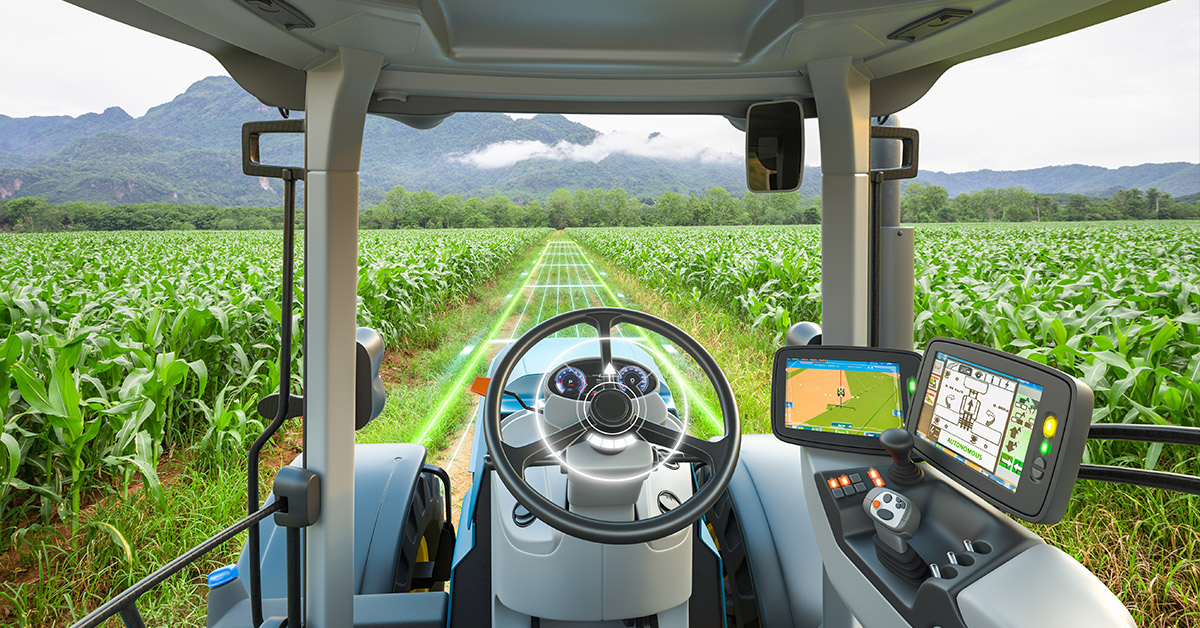
Seriously. 5G may revolutionise farming, not least with tracking devices embedded in livestock but also with increased usage of autonomous vehicles and machinery—in other words, farming rapidly automating itself to take advantage of high-speed, low-latency networks for applications that enhance productivity and safety.
That’s not all. 5G sensors will be able to collate a range of real-time information about (for example) fertilisation, livestock (see above), and moisture needs, in the latter case helping to conserve energy. One early adoption use case has seen the use of a calving sensor which attaches to the tail of cows and then alerts farmers when a cow is about to give birth (cows move their tails more during labour). Use cases like this are (no pun intended) just the tip of the iceberg. It’s one reason why IoT and 5G are already becoming a priority for the farming sector.
The opportunities are almost limitless
Examples of 5G driven innovation are ubiquitous. The three use cases above give a flavour of the scale of the opportunity but across multiple sectors including broadcasting, entertainment, shipping, travel, financial services, and others there are equivalent examples to be found. Indeed, many of us have directly experienced some of them knowingly or not. The COVID pandemic highlighted nothing so much as the importance of remote learning. With its high speed, greater capacity, and improved reliability 5G can turn the promise of remote learning, which has previously been held back by a lack of transport reliability, into an entrenched reality.

Business models and partner relations will be complex
Of course, such progress always brings with it challenges and 5G is no different. However, while “build it and they will come” is one thing, how they will pay for it is another.
The new services across different industry segments will be more complex than their antecedents. And in at least some cases, CSPs won’t have the detailed industry domain knowledge required to offer the sort of new services we’ve described above so the market will sometimes, maybe often, be reliant on partners who have the relevant domain expertise to design drive the service itself.
The extent of the changes here are hard to predict but it’s not hard to imagine players emerging who may even altogether disintermediate the CSP and work exclusively with other stakeholders; for instance, an MVNO with a mobile core working with factories in a particular sector to deliver a service across infrastructure and spectrum owned by the factory operators. There’s no CSP here, just a tech savvy MVNO offering mobility and wireless services to customers that have their own spectrum and radio assets, but no core.
Conclusion
The point to be made is that 5G service innovation is telling the communication industry something important right at the outset: that is, new services are the bedrock and new business models, new approaches to monetisation, and new partner relationships paradigms will be critical to success in the emergent 5G world.
With this in mind, CSPs must transform their operations to capitalise on the opportunities yielded by the transition to 5G networks, in the process ensuring that they are able to move quickly from tech adoption and concepts to securing new revenues via 5G-ready charging and billing solutions. And they must take steps now.
This blog should give you a strong sense of the possibilities within reach. The next step is to take a deeper dive and understand more about the requirements your business will likely need to meet in order to achieve commercial success. You can learn more via this in-depth paper on 5G and Convergent Charging from Enghouse Networks and DigitalRoute.
The paper outlines the pathway CPS will need to follow to ensure they are in a strong position for new revenue growth, while protecting and securing revenue from their existing networks and customers, as 5G networks proliferate – and able to convert all these bright ideas and promising use cases into cash.