

#image_title
How AI generates integration logic for modern OSS environments
Telecom operators rarely struggle because they lack systems. They struggle because those systems struggle to work together.
Modern networks combine legacy infrastructure, cloud-native components, and vendor-specific platforms across multiple domains. Every new technology – whether 5G, Fiber expansion, IoT platforms, or satellite connectivity – adds another layer of integration complexity.
As networks grow more distributed and dynamic, the challenge is no longer simply deploying OSS platforms. The challenge is keeping those platforms integrated as networks evolve.
OSS integration has long been one of the most expensive aspects of telecom operations. Traditionally, operators addressed this by adding more adapters, configuration, and custom integration logic – but as networks evolve, this model becomes increasingly difficult to scale.
According to TM Forum [1], integration across domains is one of the biggest challenges telecom operators face when implementing AI-driven and autonomous network capabilities.
Recent advances in artificial intelligence are beginning to change that dynamic.
AI-assisted development tools are making it possible to generate integration logic automatically based on structured descriptions of network data and desired mappings. Instead of manually configuring integrations or writing large amounts of custom logic, engineers can increasingly describe the integration intent and allow AI to generate much of the implementation.
This approach is already showing promise in early deployments, where AI-assisted tools are helping engineers produce integration logic in hours rather than days.
For telecom operators facing accelerating network change, AI-assisted integration may soon shift from an experimental capability to a practical necessity.
How AI Changes the Integration Model
Traditionally, building an OSS integration meant manually defining configuration rules, writing adapters, and creating transformation logic to map vendor data into operational systems. Much of this work is repetitive but requires deep knowledge of both the network domain and the OSS data model.
AI-assisted development introduces a different approach.
Instead of manually implementing each integration step, engineers can describe the desired outcome – how network data should map into the OSS model – and allow AI tools to generate much of the integration logic automatically.
This works particularly well in telecom environments because integrations often involve structured data transformations. Network data formats, API schemas, and inventory models all follow defined structures that AI tools can interpret and translate.
Using these inputs, AI can generate:
- adapter logic to ingest vendor data
- mappings between vendor models and OSS schemas
- transformation code to normalize network information
- validation rules to detect inconsistencies or unexpected data
Engineers still define the intent and validate the results, but AI can dramatically reduce the time required to produce the underlying integration logic.
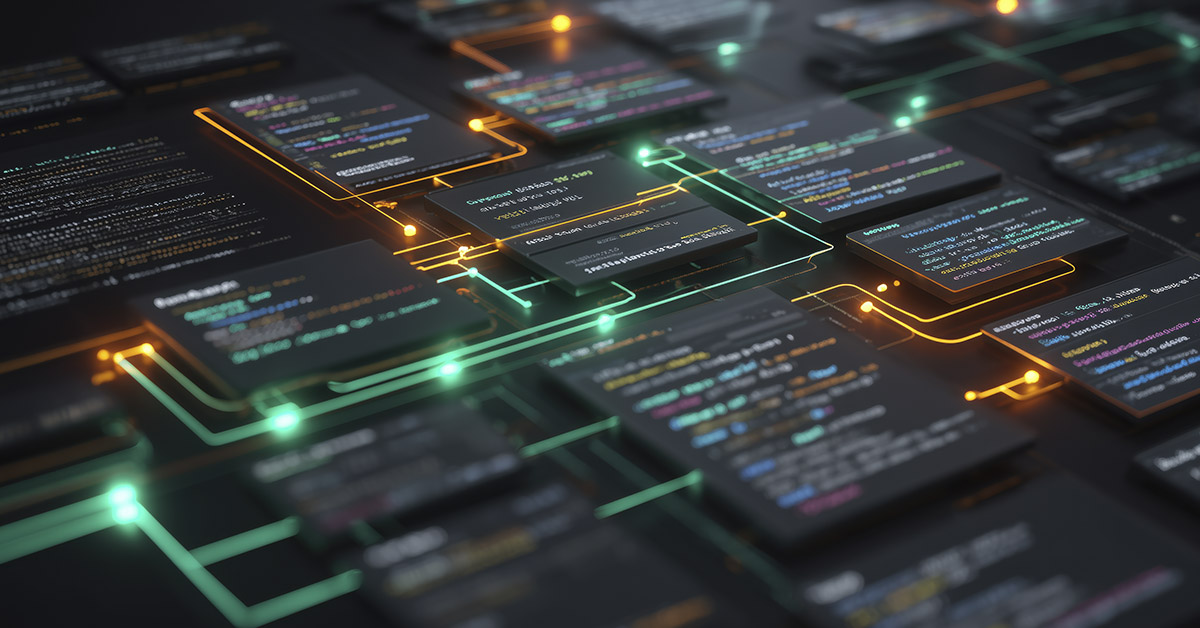
From Configuration to Generated Integration Logic
One of the more interesting shifts in this approach is how integrations are implemented.
Traditional OSS integrations rely heavily on configuration. Over time, this configuration becomes increasingly complex as additional rules, transformations, and exceptions are added.
AI-assisted approaches often take a different path: generating integration logic as code rather than embedding the logic inside configuration.
This generated code can be reviewed, versioned, and tested like any other software component. It also allows engineers to see exactly how the integration behaves instead of interpreting complex configuration layers.
As integrations grow more complex, configuration becomes increasingly opaque. Generated code remains transparent – and can be automatically documented.
This shift is not only about speed. It also makes integrations easier to understand, maintain, and evolve over time.
Early Results from AI-Assisted Integration
Despite these advances, telecom integrations will always require engineering expertise. Networks are complex systems with real operational consequences, and integration logic must be validated carefully.
AI’s role is best understood as an accelerator for experienced engineers, helping them move faster and focus on higher-value tasks.
Early results from this approach are already becoming visible. In environments where AI-assisted integration capabilities have been introduced – such as within the Aktavara network inventory platform – engineers are using AI tools to generate integration logic based on structured descriptions of network data and desired mappings.
This shifts away from configuration-heavy approaches. Integrations can instead be expressed as generated code (for example, Python) that is easier to review, version, and maintain.
Because this code is generated from clear descriptions of integration requirements, it can often be produced far faster than traditional configuration methods.
Early experience has been encouraging. Tasks that previously required several days of manual configuration and testing can often be completed in just a few hours, allowing engineers to focus on validation and operational design rather than repetitive setup work.
Toward More Adaptable OSS Environments
Telecom networks will continue to evolve.
New technologies, vendors, and services will introduce new integration requirements across OSS environments. Operators will need systems that can adapt quickly without creating additional operational complexity.
AI-assisted integration represents one step toward that goal.
By helping engineers generate integration logic faster and maintain it more efficiently, AI can support a more flexible OSS environment – one that evolves alongside the networks it manages.
For telecom operators facing accelerating network change, that flexibility may soon become less of an advantage and more of a necessity.
Learn More
Learn how Enghouse Networks’ Network Resource Management can help simplify OSS integration and support more adaptable telecom operations.