A telecom customer consolidated messaging and VAS platforms with Enghouse Networks, achieving streamlined management and virtualisation benefits for improved service efficiency and innovation.
With the advent of 4G and 5G technologies, wireless networks can now use IP-based protocols for delivery of all services. Some data-driven services (such as SIM-based IoT and 5G messaging), still rely on services and technologies originally developed for earlier network generations.
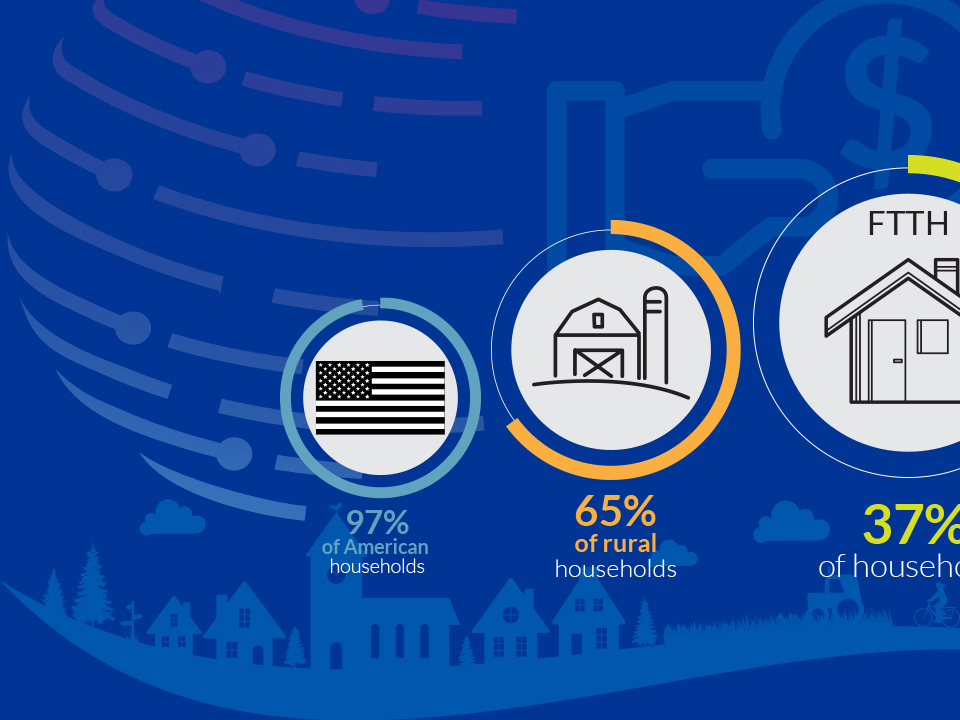
A reliable broadband connection is critical for the success of rural areas, especially during these recent times. Explore the infographic below to learn about the collective effort to close the rural and urban digital divide in North America.
In rural U.S. and Canada, fixed broadband Internet connectivity – particularly fiber – is uncommon. This is for two main reasons: networks are expensive to build, and rural areas are typically more geographically distant and less populous than urban areas.
Fibre is essential to realising the potential of massive IoT and how 5G is critical for your business. With 5G, a minimum connectivity of a million devices for the same coverage area can be achieved. Also new 5G networks are designed to support this truly ‘Massive IoT’ deployment and new applications.
Expected within two years at most and set to enable thousands of low latency applications, particularly for industrial purposes, Multi-Edge Access Computing (MEC) is emerging as a key requirement to support 5G SA (Standalone). Cloud computing and IT service power at the edge of a network offers many benefits, but to deliver on MEC’s enormous commercial promise, fibre has to play a central role.
Private 5G industrial IoT networks are about to become big. Probably, very big, because there’s a huge range of potential use cases, and stakeholders (across many sectors) are eagerly planning to capitalise on new, high-performance mobile capabilities to run wireless operations in factories, broadcasting, sports, smart cities and more.
This webinar discusses the size of the problem, the impact that limited broadband availability has on rural consumers’ lives, and solutions to the problem. Specifically, we will discuss the activity that is underway, and the tools available, to increase rural access to broadband fiber.
Telefónica Germany partnered with Enghouse to enhance network management. Enghouse streamlined SRAN and 5G rollout, improved base station management, and automated processes, increasing efficiency and performance.